

 2025-12-26 11:50:33
By


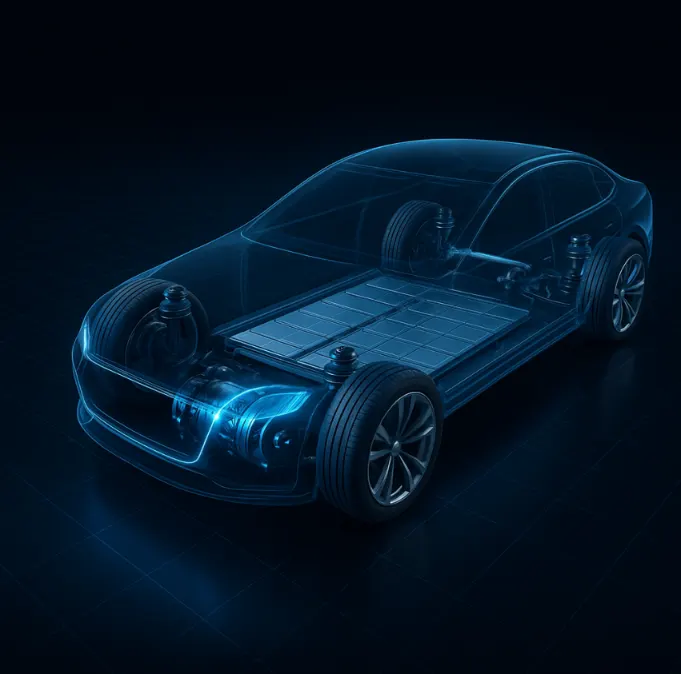
When you start planning or building new energy vehicles, you quickly end up living inside motor data sheets. Power, torque, gradients, duty cycles, all of them shape how a vehicle feels and how much work it can do on a charge. Behind those numbers, the choice of drive motor technology has a quiet but very direct impact. More and more projects now use a PMSM motor for electric vehicles instead of a traditional induction or DC motor.
This shift is not just a buzz term on a page. Permanent magnet motors offer better power use, tougher slow-speed pull, and a tinier pack. When you set those marks against true ride kinds, from slow neighborhood cars to clean trucks and work haul rides, the pluses become way clearer to spot.
On a basic level, a permanent magnet synchronous motor uses magnets in the rotor instead of rotor windings. There is no rotor copper loss, so less energy turns into heat. For an EV, that simple structural change has several effects that you feel on the road or in daily operation.
Most new energy vehicles do not sit at one fixed load all day. They run stop–go city routes, work in partial load, or switch between light and heavy duty. A PMSM motor for electric vehicles keeps higher efficiency in that variable range because it does not waste power exciting the rotor. Less loss in the rotor means lower current draw for the same work, which gives you better range from the same battery pack or a little more comfort when you size the battery conservatively.
Urban driving and work vehicles spend a lot of time in the low-speed region. Pulling away from a stop sign, climbing a ramp in a parking garage, starting a loaded sanitation truck after every bin, all of that lives at low speed and high torque. The magnetic field in a PMSM is always “ready”, so the motor can deliver strong torque from very low speed. That gives you more confident starts, smoother hill climbs, and fewer nervous moments when the vehicle is full and the road is not flat.
Because the rotor has no copper bars or windings, a PMSM can often reach the same output in a smaller frame. Less volume and mass help you with packaging. It is easier to place the motor near the axle, integrate it into a compact drive unit, or share cooling circuits with other components. Lower rotor losses also mean lower temperature rise, which is helpful for long continuous duty and for vehicles that work in hot climates or tight bodywork with limited airflow.
When you choose a drive motor, you rarely start from scratch. You know the vehicle class, the target speed, and the typical load. From there, power levels give you a first filter.
This band fits low-speed community vehicles, resort shuttles, campus cars, and similar applications. Speeds are modest, usually in the 20–35 km/h range, and payload is not extreme. A 3–5 kW PMSM gives you enough power for steady cruising, while the good low-speed torque helps with small hills and full seats. At this level, the gains show up as cooler running, quieter operation, and slightly longer range for the same battery size.
Light commercial EVs, small box vans, and internal logistics vehicles need more muscle. They carry pallets, tools, or parcels. They see frequent stops, tight turns, and loading ramps. In this range, a PMSM drive motor offers a clear benefit. At the same rated power, you get higher torque in the low and middle speed region, so the vehicle accelerates better under load and copes more easily with slopes. Efficiency in partial load helps a lot when the route is mixed and the vehicle is not always full.
Sanitation trucks, sweepers, and other utility vehicles rarely run fast, but they work hard. They carry heavy bodies, hydraulic systems, and waste or water loads. Starts are frequent and often on slight grades. In the 20–40 kW band, a PMSM motor for electric vehicles can provide high rated torque with even higher peak torque available for short bursts. That combination suits heavy low-speed work. You can often keep the motor compact while still getting enough pull for busy routes and early morning shifts when nobody wants a struggling truck blocking a narrow street.
Power gives you a rough size. Torque tells you how the vehicle will feel. Two motors with the same kilowatts can behave very differently once you put them in a chassis.
Rated torque is what the motor can deliver over long periods without overheating. It supports your steady climbing ability and cruising on mild gradients. Peak torque is available for a short time, usually a few seconds, and covers things like starting on a hill or pulling away from a stop with a full load. In an EV project, both numbers matter. If you only look at power, you may pick a motor that looks fine on paper but feels weak or runs too hot once it leaves the lab.
You can often get closer to the right torque range by asking a few simple questions. How steep are the worst ramps and how often will the vehicle climb them? How many starts per hour does a typical shift have? Does the vehicle spend most of its time cruising, or does it move in short hops with frequent stops? Low-speed sightseeing vehicles care more about smooth pull away and quiet running. Logistics vehicles care about start torque and acceleration when fully loaded. Sanitation vehicles care about repeatable pull from low speed with a heavy body and sometimes a trailer. Each pattern points to a different rated and peak torque need.
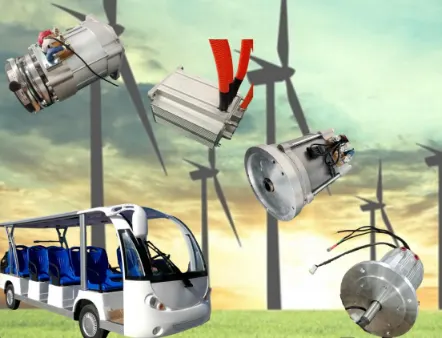
Once you know the power and torque envelope, you can map PMSM drives to concrete use cases.
Sanitation fleets see hard work in low-speed, high-friction environments. Frequent stops, tight spaces, gradients, and heavy loads are common. A PMSM suits these vehicles because it gives strong low-speed torque, high efficiency in partial load, and cooler operation over long shifts. For you, this can mean more bins per charge, less strain on the powertrain, and calmer drivers who do not need to fight every start on a slope.
Community EVs and sightseeing cars carry people rather than goods. Here, comfort and noise level matter as much as simple power. A PMSM can help by delivering smooth, quiet torque with less vibration. At the same time, its higher efficiency at low speeds supports longer routes between charges. The result is a vehicle that feels more refined, even though the basic power level is modest.
Forklifts and industrial trucks live in a demanding world of short, intense moves. They start and stop constantly, often on ramps or uneven floors, sometimes with heavy loads in the mast. A PMSM is a strong match for this pattern because it can push high torque from very low speed and deal with frequent reversals. When the same drive system supports both travel and hydraulic functions, good efficiency and low heat help keep the whole machine stable over a long shift.
Choosing a motor for an EV project does not have to feel like guesswork. A clear step-by-step approach makes it easier to narrow down options.
Start with the vehicle category and typical work. Low-speed passenger and sightseeing EVs sit in the 3–5 kW area. Light commercial and logistics vehicles cluster in the 5–15 kW band. Sanitation and special-purpose vehicles often need 20–40 kW or more. This first filter keeps you from looking at motors that are obviously too small or too large.
Next, focus on torque. List the heaviest loads, steepest ramps, and the most demanding use cases. Then compare rated and peak torque from candidate motors against those needs. If routes are flat and loads light, you may not need very high peak torque. If steep ramps or heavy bins are common, peak torque becomes a critical number.
Voltage bases like 60 V, 72 V, 220 V, or 230 V tie the motor, battery, and drive together. Low-voltage setups fit smaller, slow-speed rides. While higher voltages fit heavier rides with higher power. When you pick, think about safe rules, control choices, and how the chosen base fits your current battery and wire norms.
At last, look at basics like frame size, bar kind, mount, and cool. A tech perfect motor that does not fit under the cover or cannot share the set cool loop will bring pains later. It is often worth sharing draws and rough sets early with the motor giver. So you skip last second shocks.
Qingdao Enneng Motor Co., Ltd. (ENNENG) is a high-tech enterprise focused on the R&D and manufacturing of permanent magnet motors, especially low-speed direct-drive, high-torque and constant-speed PMSM across a wide power range. ENNENG permanent magnet motors have been applied in demanding industrial environments such as gold and coal mines, tire factories, oil fields and water treatment plants, where long duty cycles, harsh conditions and strict energy-saving targets are the norm. Experience from these applications—belt conveyors, ball mills, pumps, air compressors and other heavy drives—gives a solid engineering base for projects that need high efficiency, high torque density and reliable continuous operation.
For a pmsm motor for electric vehicles, especially utility EVs or mobile equipment with working cycles close to industrial machines, ENNENG can draw on its multi-pole direct-drive designs and high-performance rare-earth magnet rotors to help balance power level, torque range and thermal behavior in a compact package.
Q1: Why choose a pmsm motor for electric vehicles instead of an induction motor?
A: It gives higher efficiency and stronger low-speed torque, so you get better range and pulling ability from the same battery.
Q2: How do you pick the right power level for a pmsm motor for electric vehicles?
A: Start from vehicle class and duty. Low-speed passenger EVs often use 3–5 kW, logistics EVs 5–15 kW, and sanitation or utility EVs 20–40 kW or more.
Q3: Does a pmsm motor for electric vehicles always need a special controller?
A: It needs a drive that supports PMSM control, but most modern EV inverters already handle this, so it is usually a standard choice, not an exotic one.
Q4: What data should you prepare before talking to a PMSM supplier?
A: Vehicle weight, target speeds, gradients, daily running hours, voltage platform, and any packaging limits. This lets the supplier propose a motor and drive that fit.
Q5: Is a pmsm motor for electric vehicles worth the extra cost in small projects?
A: For light use the payback is slower, but in vehicles that run many hours or carry heavy loads, the energy savings and better torque usually offset the higher purchase price.