
 2025-12-04 11:50:51
By


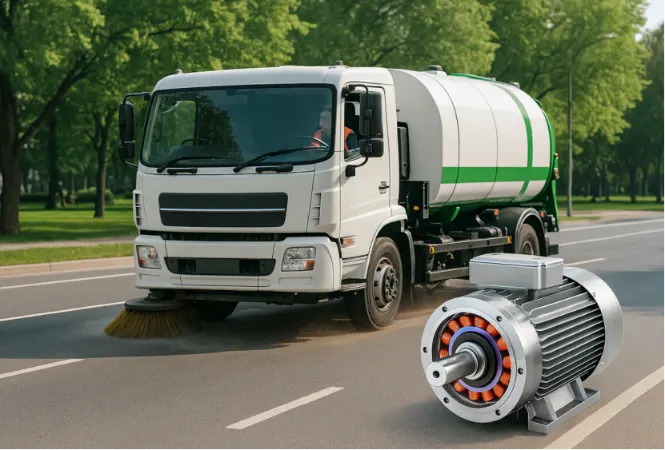
When you design or buy an electric sanitation truck, the motor is not only a spec sheet number. It decides if the truck climbs a wet ramp with a full bin, if it can work a whole shift without overheating, and how long the battery lasts every day. Pick too small, and the truck feels weak. Pick too big, and you pay for power you rarely use. This guide walks through how much power you really need and how to match that to a real electric sanitation truck motor in the market.
Sanitation trucks do a very different job from passenger cars. They crawl at low speed, stop and go again and again, and often run for many hours in one shift. The motor has to give strong torque at walking speed, not only on flat roads but also when the bin is full and the street is narrow or sloped. If the power is wrong, problems show up quickly.
Your truck may spend most of its life between 5 and 30 km/h, moving from bin to bin or sweeping a lane. It may carry several tons of waste or water. Every start needs a lot of torque, and there is little time for the motor to cool down. Rain, dust, and curbs add more stress. A normal city EV duty cycle does not match this kind of slow, heavy work, so you cannot simply copy a passenger car motor and hope it will do fine.
If the motor power is too low, the truck struggles on ramps and hills, the controller often hits current limits, and the whole drive system runs hot. That heat cuts motor life and can also hurt the battery. If the motor is too large, the system cost goes up and part-load efficiency drops. The result is a truck that still cannot finish a long route on one charge, even though the spec sheet looks “strong”.
Looking at typical products in the market, you can see a few clear power bands. For example, one sanitation-drive series uses 5 kW, 10 kW, 20 kW and 40 kW permanent magnet synchronous motors at roughly 60–230 V, all designed for 1500–3000 rpm with high peak torque for starting and climbing.
A 5 kW motor suits small three-wheel or mini four-wheel trucks that carry light loads inside a community, park or factory. Travel speed is low, routes are short, and slopes are gentle. Here you care more about low cost and low energy use than about strong hill performance.
Around 10 kW, you can move to a compact truck with higher speed and a bit more payload. This level works for small garbage collection vehicles and light road sweepers in flat urban areas. You get better acceleration and more reserve torque without a huge jump in battery size.
A 20 kW class motor suits medium trucks that collect bins along long routes or carry waste from a community station to a transfer station. These trucks may see slopes above 10%, so they need plenty of continuous torque. This is also a sweet spot for many low-floor electric chassis that run all day in city work.
Once you reach heavy compression trucks and large road sweepers, a 40 kW permanent magnet motor gives strong margin. It can handle steep ramps with a full load, plus long routes where the motor runs close to its rating for hours. Here you design not only for traction, but also for enough power to run hydraulic pumps or auxiliary loads through a PTO or separate motor.
Guesswork is risky. A simple four-step check helps you get close to the right number before you talk with suppliers.
Add the truck empty weight, top carry, and any special gear like water holders. A small street-clean truck may sit below 2 tons. A heavy press truck can hit 10 tons or more. The heavier the truck, the more power you need. Just to stay with cars. And avoid too much load on the drive.
Sanitation routes are mostly low speed, but you still need some margin for moving between zones. If your average speed stays under 25 km/h with frequent stops, the motor works close to its torque limit more often than in a highway EV. That is why a 10–20 kW motor on a sanitation truck can feel as “busy” as a higher power drive on a city bus.
Check the steepest ramp you must climb when fully loaded: depot exits, basement ramps, bridge approaches. For slopes around 8–10%, a 10 kW drive on a small truck may be enough. When you face long climbs above 15–20%, you are safer with a 20 kW or even 40 kW class drive, especially if roads are rough or often wet.
Motor power is not only kilowatts. It is also battery voltage and controller current. A higher voltage system, such as 144 V or 230 V, lets you reach the same power with less current. That makes cables smaller and cuts heat in the controller. When you pick a motor, always check its rated voltage and make sure the controller and battery pack are built for that level.
Many new platforms for sanitation work now move from classic induction drives to permanent magnet motors. The main reason is better efficiency at low speed and high torque, which is exactly what your truck needs.
With a modern permanent magnet motor for sanitation vehicles can reach IE4 or above efficiency, about 5–10% higher than a similar three-phase asynchronous motor, and it keeps a higher power factor as well. These motors use rare-earth magnets on the rotor, so they avoid excitation losses and can stay cooler under the same load. For you, that means longer range per charge and less stress on the cooling system.
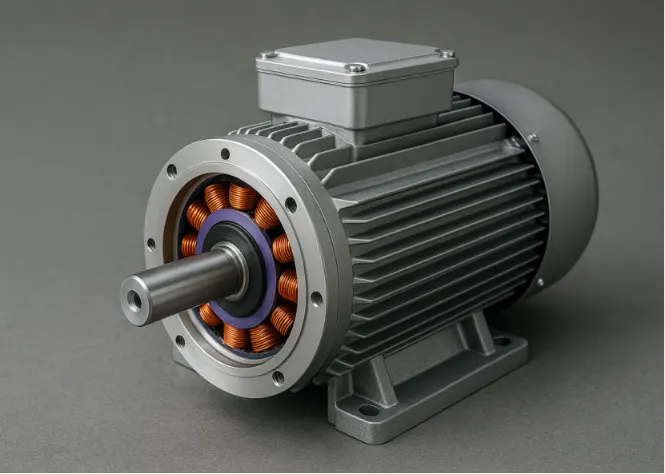
Cooling is not just about comfort; it decides how much of the nameplate power you can use in real life.
Small trucks and three-wheelers with 5–10 kW drives often use air-cooled motors. The structure is simple, cost is low, and maintenance is easy. If the vehicle runs short routes with many breaks, the airflow during driving may already be enough.
Once you work in the 20–40 kW range and the truck runs long continuous shifts, water cooling becomes more attractive. A compact 20 kW electric motor for sanitation truck with a water jacket can deliver high continuous torque in a small package, which helps you keep the motor low in the chassis and away from splash zones
It helps to think in simple buckets instead of chasing an exact single number.
For narrow streets inside gated communities or parks, with light bins and gentle slopes, a 5–10 kW electric sanitation truck motor is usually enough. Range matters more than speed here.
For city collection trucks that handle mixed routes and moderate hills, 10–20 kW gives a better safety margin. You get stronger starts, less overheating, and more flexible route planning when traffic is heavy.
For large sweepers and compression trucks that must carry heavy loads and work long shifts, plan around 20–40 kW. In this band you can also consider extra motors for hydraulics or brushes, so each system can run in its best speed range.
ENNENG is a Chinese manufacturer focused on permanent magnet AC motors and related drive solutions. Its product range covers low-speed, high-torque direct-drive motors and constant-speed units, with power levels from a few kilowatts up to multi-megawatt designs. Many of these motors use rare-earth NdFeB magnets and advanced rotor structures to cut iron loss and stray loss, so the overall efficiency can reach IE4–IE5 levels and save a noticeable amount of energy in daily work.
With its own R&D team and cooperation with several universities, ENNENG can design motor and drive packages around a customer’s duty cycle, including low-speed direct-drive solutions that remove the gearbox and cut noise and maintenance. For electric sanitation vehicles that need stable torque, quiet work and long life, this kind of permanent magnet drive platform offers a strong base for custom projects.
Q1: Is a 5 kW motor enough for an electric sanitation truck?
A: It can work for very small three-wheel or mini four-wheel vehicles with light loads and flat routes. For city work with hills or heavy bins, you usually need more power.
Q2: When should you choose around 10 kW of motor power?
A: Around 10 kW fits compact urban trucks that run short and medium routes with moderate slopes. It gives better hill ability and fewer overheating issues than a 5 kW drive.
Q3: What kind of truck needs around 20 kW of motor power?
A: Medium collection trucks that carry several tons and face 10% slopes are good candidates. A 20 kW class drive offers stronger continuous torque and better reserve for long shifts.
Q4: Do all heavy sanitation trucks need 40 kW?
A: Not always. Some lighter road sweepers run well on 20–30 kW. Very heavy compression trucks or vehicles with long steep climbs benefit from 40 kW or higher, especially if they also power large hydraulic systems.
Q5: Why are permanent magnet motors popular in sanitation trucks?
A: They give high torque at low speed, higher efficiency, and lower heat for the same work. That means longer working time per charge and less risk of drive failure during a long route.