

 2025-11-14 11:50:25
By


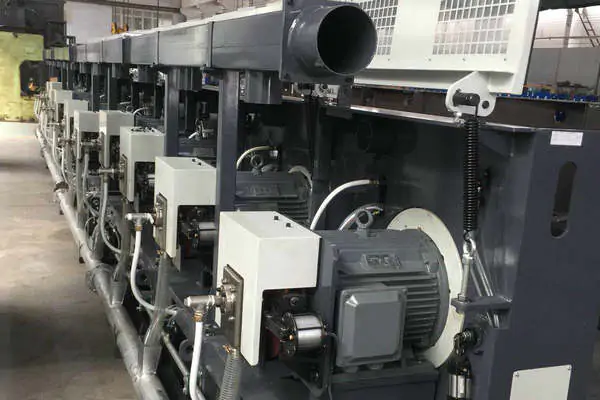
Every cable plant, wire drawing line, and take-up station runs into the same core headaches: high energy cost, constant gearbox service, angry noise levels, hot motors at crawl speed, and the never-ending fight for floor space. These are classic cable industry motor problems. If you’re in that world every day, none of this is news. What has changed is that you now have access to permanent magnet synchronous motors (PMSMs) built to drive the load directly at working speed, with very high torque even at single-digit rpm, instead of forcing a high-speed induction motor through a gearbox.
When your capstan or drum runs slow but still pulls real load, the drive system can burn power like a space heater. A typical setup in older cable machinery is a standard induction motor spinning fast, then a gearbox to drop the speed. The gearbox throws away part of that input power as heat through friction and oil shear. The induction motor itself also wastes energy in rotor slip.
A normal asynchronous motor wants to run at higher rpm. To get slow pulling force, you gear it down. Every mechanical stage in that stack adds loss and heat. You see the result on your kWh bill.
A low speed high torque motor for cable field duty is different. A permanent magnet synchronous motor uses a rotor with permanent magnets, so there is no slip and far less wasted heat in the rotor.
Because the unit is designed as a direct drive, it runs at production speed already. The gearbox can be removed in many cases. That cuts the path where energy would normally leak away and lets you keep efficiency in the mid-90 percent range with power factor close to 1.0, even off nominal load.
In plain terms: less electricity burned to move the same ton of product.
Energy waste is only the first headache. The second is downtime. If you are still on the motor plus reducer layout, you already know this one. You stop not only for scheduled oil changes and seal checks, but also for vibration-related issues, gear wear, bearing wear, leaks, alignment drift. That’s a lot of hands-on work for something that is supposed to “just turn the drum.”
Gear reducers live a hard life. High input speed, constant torque load, heat. Over time, backlash creeps in, noise goes up, oil gets dirty. You end up planning weekend shutdowns for rebuilds and calling that normal.
A direct drive PMSM for cable machinery drives the drum or take-up directly, so the reducer is gone. Fewer rotating joints and fewer bearings mean fewer leak points. With less vibration and lower mechanical stress, the system tends to run longer between service stops, and many users refer to it as close to maintenance-free on the drive side.
That saves overtime hours, yes, but it also saves lost production windows.
Traditional metal drawing equipment in the cable industry often features intricate setups with multiple components like high-speed motors, gearboxes, couplings, and reducers, leading to complicated installations, higher failure rates, and challenges in integration within existing machinery.
Most legacy systems rely on a chain of mechanical elements to achieve the necessary speed and torque, resulting in a convoluted design that increases points of potential failure, requires more expertise for setup, and complicates upgrades or repairs.
A direct-drive permanent magnet synchronous motor, such as the low-speed high-torque PMSM for wire drawing machines, eliminates the need for gearboxes and additional transmission components. This simplifies the overall structure, improves transmission efficiency, solves inherent losses during wire drawing processes, and saves motor installation space while enhancing overall motor efficiency. By streamlining the power structure design and process, it reduces complexity, making the system easier to install, integrate, and operate in cable field applications like wire drawing lines.
Drawing and spooling often require very slow, very steady pull. That is exactly where classic induction-plus-gearbox drives can get hot and twitchy. You see housing temperature climb. You see tension jump a little instead of staying flat. You get marks.
Induction motors at very low effective output speed are not happy by nature. They need the reducer to drop rpm, and the reducer adds friction. The combination can pulse torque instead of feeding it like a smooth hydraulic pull. That pulse shows up as ripple in product tension.
A permanent magnet synchronous motor is synchronous. The rotor follows the stator field, so you get clean torque even at crawl speed.
Because many PMSM designs in this space are multi-pole, rated speed can be in the single-digit rpm range while still delivering production torque.
That slow, heavy pull without judder is one reason many plants now look first at a low speed high torque motor for cable field duty instead of trying to push one more rebuild out of the old reducer.
A lot of cable shops do not have spare floor space. Older stands sit close to the wall. Walkways are already narrow. Dropping in a long motor plus coupling plus gearbox plus brake can be physically painful.
Mechanical reduction takes room. You’re stacking devices in a line, and each one needs clearance for service. Over years, those stacks grow like weeds.
A direct-drive PMSM sits where the drum needs torque. No long gearbox case. No extra coupling housing. The whole drive train gets shorter and easier to access.
For reference, a typical low-speed, high-torque PMSM used in cable machinery features a direct drive system, where the motor is directly coupled to the drum or other load without intermediary gearboxes. This design ensures precise control of torque output, high efficiency, and minimal maintenance. Unlike traditional systems, this simplified configuration improves performance and reliability while reducing the footprint and complexity of installation.

Qingdao Enneng Motor Co., Ltd. focuses on permanent magnet synchronous motors for demanding industrial duty such as wire drawing machines, belt conveyors, oilfield PCP systems, tire equipment, and aeration service. The portfolio covers direct-drive and gearless permanent magnet designs that deliver high torque at very low base speed, often in the single-digit rpm zone, without needing a gearbox. These low-speed, high-torque permanent magnet synchronous motors are already running in wire drawing, belt conveyor, and continuous process lines — this is standard production hardware, not a pilot lab build.
Reported benefits include strong pull at start, quieter running, less vibration, and fewer shutdown hours for reducer work.
The company supplies matched drive cabinets to run the PMSM with stable torque and near-unity power factor, often in the mid-90 percent efficiency range across a wide load band.
For plants that want numbers not promises, direct contact is available for sizing, retrofit planning, and energy savings review.
Q1: Why are cable industry motor problems so common?
A: Most legacy lines still use a fast induction motor plus gearbox. Gear mesh, heat, slip loss, oil service, and vibration all stack up, so cost and downtime pile up with age.
Q2: What is the main gain from a low speed high torque motor for cable field work?
A: A multi-pole permanent magnet synchronous motor can deliver high torque at single-digit rpm without a reducer. This cuts energy loss, simplifies the layout, and helps with steady pull on the product.
Q3: How can you cut noise on the shop floor and how to reduce motor noise in cable factory lines in practice?
A: The biggest noise source is often the gearbox. Taking it out and driving the load directly with a PMSM removes that gear mesh whine and drops vibration at the operator station.
Q4: Why does a direct drive PMSM for cable machinery help with uptime?
A: You lose the reducer, so you lose one of the highest-failure items on the stand. Fewer rotating parts means fewer leaks, fewer bearing problems, and fewer emergency stops for maintenance.
Q5: Is this only about saving electricity?
A: Energy is part of it, but the real pitch is stability. High torque at low speed, smoother tension, less scrap, and shorter drive trains. Those gains show up on product quality sheets and in fewer angry weekend calls.