
 2026-11-05 14:14:35
By


Industrial drive systems often lose efficiency for reasons that are not visible on a motor nameplate. An induction motor may be oversized for starting, operate below its best load point, or depend on a gearbox that adds losses, noise, and maintenance work. When the motor, converter, cooling system, and driven machine are not properly matched, the plant pays for unused capacity while production gains little.
A correctly specified permanent magnet motor offers a more coordinated solution. It can provide high efficiency, stable torque, and better power utilisation, but these benefits depend on application fit. This is where ENNENG connects permanent magnet motor design with industrial operating requirements, helping customers select an efficient drive rather than simply purchase a motor.
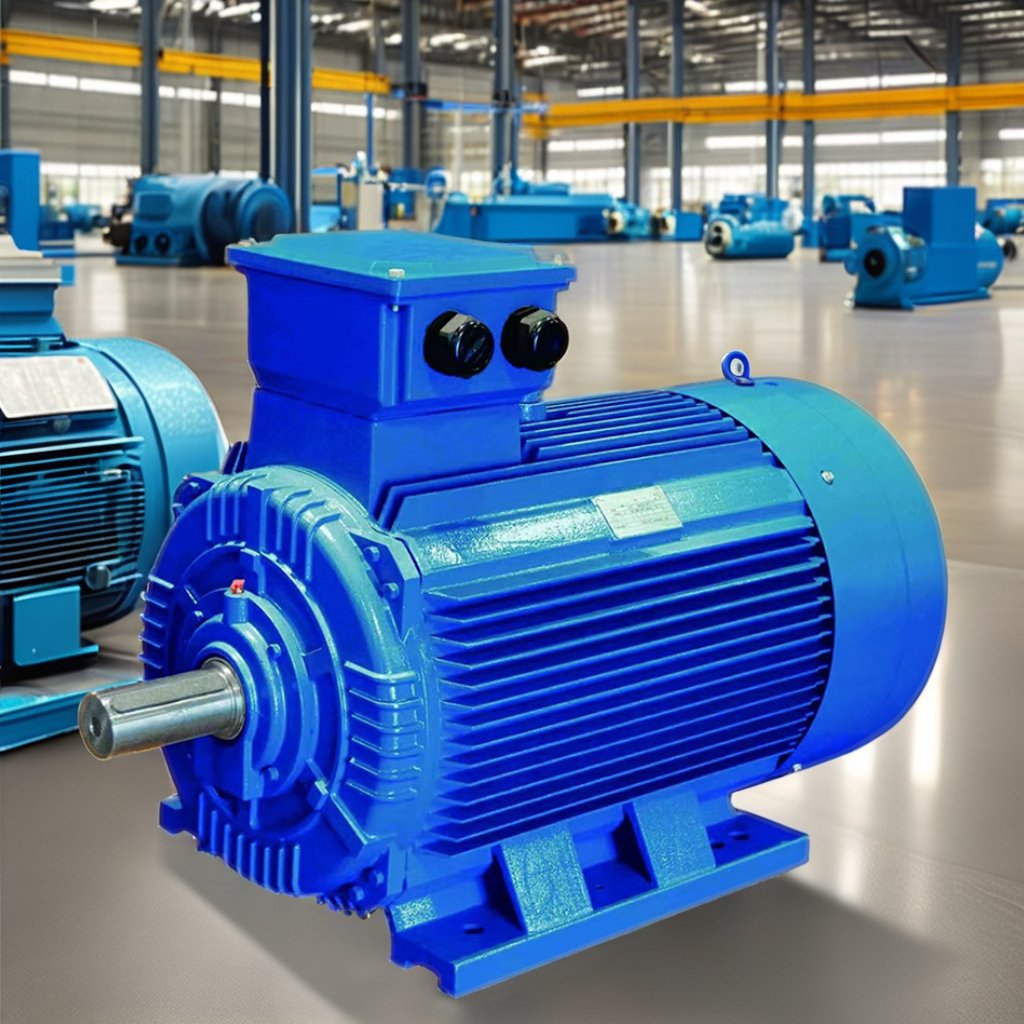
An industrial permanent magnet motor uses permanent magnets to establish the rotor magnetic field. In a permanent magnet AC synchronous motor, the rotor runs in synchronism with the stator’s rotating magnetic field and does not require the same induced rotor excitation as an induction motor. This reduces a major source of rotor loss and supports high efficiency across suitable speed and load ranges.
A permanent magnet AC synchronous motor, commonly called a PMSM, combines a permanent-magnet rotor with a three-phase AC stator. The motor is normally operated with a compatible variable-frequency drive using vector control. Depending on the application, encoder or PG feedback can be added for accurate low-speed torque, speed regulation, and overload control.
Because the rotor magnetic field is supplied by permanent magnets, the motor avoids the slip-related excitation losses associated with an induction motor. This can reduce input power and thermal stress, particularly in continuous-duty applications such as compressors, pumps, fans, mixers, and process machinery. ENNENG’s published standard products are described as reaching efficiency above IE4; the final performance must still be verified against the selected rating, operating point, converter, and cooling configuration.
A properly matched synchronous motor can provide a high power factor and lower current demand than a comparable induction motor. In a plant with many drives, this may improve the use of transformers, cables, and electrical capacity. High torque density is also valuable in low-speed equipment, where a multi-pole permanent magnet motor may support a direct-drive design and reduce dependence on a reduction gearbox.
Direct-drive permanent magnet systems can remove gearbox meshing, lubrication, and alignment requirements. The result may be fewer mechanical failure points and simpler maintenance. However, direct drive is not a universal replacement: engineers must check breakaway torque, shaft loading, torsional dynamics, braking, cooling, and foundation conditions before approving the design.
An industrial permanent magnet AC synchronous motor can be adapted to many applications when the electromagnetic and mechanical design match the duty. Typical uses include air compressors, centrifugal pumps, cooling towers, conveyors, ball mills, rubber and tyre machinery, extruders, water-treatment equipment, mining machinery, oil-field systems, and renewable-energy generation.
Compressors, pumps, fans, and process lines often operate under changing flow or pressure requirements. A PMSM with a suitable drive can maintain efficient torque production across a controlled speed range. Selection should be based on the actual load curve, not only the rated power of the old motor.
Ball mills, conveyors, mixers, and hoists may require high torque at low speed and repeated starts. A direct-drive permanent magnet motor can be designed with multiple poles to meet the required speed without a conventional speed reducer. The design must be validated against the machine’s starting and overload conditions.
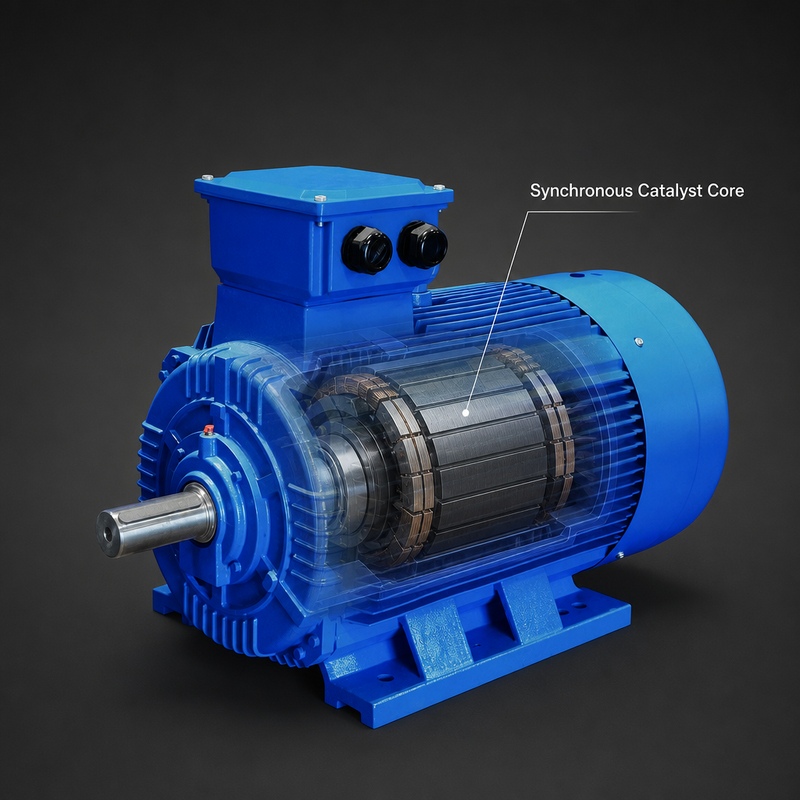
An induction motor creates its rotor magnetic field through induced current, which produces slip and rotor losses. A permanent magnet motor uses magnets to establish the rotor field, so it can operate synchronously with lower rotor excitation loss. In practical terms, a PMSM may provide higher efficiency, better power factor, higher torque density, and lower thermal loss at the same duty.
The comparison must remain system-based. An induction motor may still be appropriate for simple, lightly used, or low-cost applications. A permanent magnet motor becomes more compelling when operating hours are high, the load varies, low-speed torque is important, or gearbox losses and maintenance are significant.
What should I look for in a permanent magnet motor manufacturer? First, verify whether the supplier can review the complete application: torque, speed, duty cycle, voltage, cooling, protection, installation dimensions, control method, and environmental conditions. A reliable permanent magnet motor supplier should provide more than a standard catalogue; it should explain how the selected motor will fit the driven equipment.
Check whether the supplier offers standard, general-purpose, direct-drive, and tailor-made designs. Application evidence is also important. ENNENG’s published case records include a 250kW, 167rpm, air-cooled direct-drive permanent magnet motor for a gold-mine ball mill. The case demonstrates the type of low-speed industrial application for which direct-drive PMSM engineering can be evaluated; it should not be treated as a universal saving guarantee.
The manufacturer should be able to explain its design, manufacturing, inspection, and service process. ENNENG describes itself as a high-tech enterprise integrating permanent magnet motor R&D and manufacturing, with products used in mining, tyre, oil-field, water-treatment, and other industrial sectors. For procurement, request drawings, test data, control requirements, cooling details, and acceptance criteria before placing the order.
ENNENG develops and manufactures permanent magnet motors for industrial energy-saving drive systems. Its portfolio includes standard motors, direct-drive and gearless motors, tailor-made products, and permanent magnet generators. The company’s value lies in matching electromagnetic design with installation, cooling, control, and production requirements.
For customers evaluating an industrial permanent magnet motor, ENNENG can support motor selection, retrofit assessment, direct-drive design, and application-specific customisation. The objective is not to replace every motor with one model, but to deliver a permanent magnet motor solution that is efficient, compatible, and maintainable in the customer’s operating environment.
The value of an industrial permanent magnet motor is determined by application fit. Lower rotor losses, high power factor, torque density, and direct-drive potential can improve energy performance and reduce mechanical complexity, but only when the motor is correctly matched to the machine and its controls.
If you are planning a new industrial drive, motor retrofit, or energy-efficiency upgrade, contact ENNENG with your existing motor data, load profile, drawings, voltage, speed, and cooling requirements. ENNENG can help you evaluate a high-efficiency permanent magnet AC synchronous motor and develop a customised drive solution for your application.
A: A PMSM uses permanent magnets for the rotor field, while an induction motor creates it through induced current. A PMSM can reduce rotor losses and improve efficiency when correctly matched.
A: It is a three-phase AC synchronous motor with a permanent-magnet rotor, normally controlled by a compatible variable-frequency drive.
A: Look for proven application engineering, customisation, test data, compatible controls, quality systems, and evidence from comparable industrial applications.
A: Yes. ENNENG provides standard, direct-drive, and tailor-made permanent magnet motor solutions for industrial equipment.
A: No. Suitability depends on torque, speed, duty cycle, control, environment, mechanical fit, and lifecycle economics.