 2026-10-09 14:38:39
By


In the modern industrial sector, operations managers face persistent bottlenecks: soaring energy costs, frequent equipment downtime, and heavy maintenance overhead. Traditional induction motors, long the standard in heavy industries, are increasingly recognised as primary sources of energy waste and mechanical vulnerability due to rotor losses and gearbox failures . For enterprise buyers searching for reliable commercial permanent magnet motors for sale, transitioning to advanced motor technology is a critical step to maintaining market competitiveness.
ENNENG addresses these challenges directly. As a leading high-tech enterprise specialising in the R&D, design, and manufacturing of high-efficiency permanent magnet motor solutions, ENNENG provides comprehensive, engineered systems that eliminate standard rotor excitation losses. By focusing on tailored drive solutions, ENNENG helps industrial clients worldwide achieve green production while lowering operational overhead .
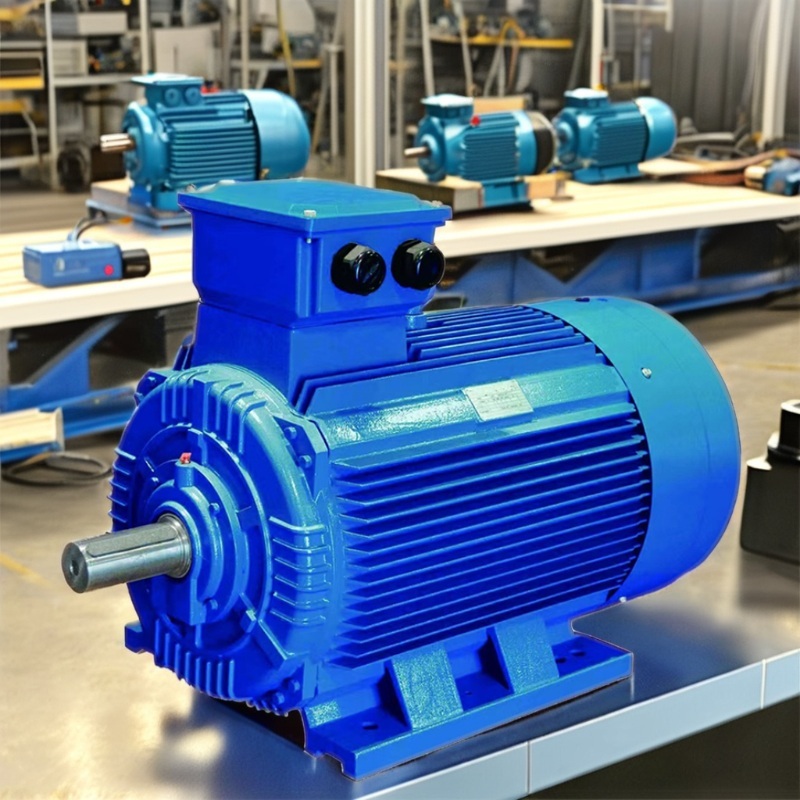
To understand the benefits of modern industrial design, we must examine the physical and operational differences between a traditional induction motor and an advanced synchronous motor.
A synchronous motor operates at a speed directly locked to the frequency of the stator’s rotating magnetic field . Unlike asynchronous induction motors, which experience “slip” (the rotor rotates slower than the stator field to induce current), a synchronous motor maintains absolute speed consistency regardless of load changes. This precise speed control is vital for high-precision industrial processes.
In a standard asynchronous motor, current must be continuously induced into the rotor windings to create a magnetic field, resulting in significant “rotor copper loss” and excess heat . In contrast, a permanent magnet synchronous motor utilises high-performance NdFeB (Neodymium Iron Boron) permanent magnets embedded in the rotor . This pre-magnetised rotor provides the required air-gap magnetic field without drawing excitation current from the grid, entirely eliminating rotor-side copper losses .
Choosing a high-efficiency PMSM motor from ENNENG offers clear technical advantages over legacy induction systems in efficiency, power factor, and thermal performance.
An industrial permanent magnet motor from ENNENG maintains high efficiency across an exceptionally wide operating range of 25% to 120% of the rated load . The rated efficiency of an ENNENG permanent magnet motor is 2% to 5% higher than standard asynchronous motors, remaining high even under partial loads .
An ENNENG high-efficiency PMSM motor can achieve a power factor of 0.95 or higher, up to 1.0, compared to asynchronous motors, which peak around 0.86 . This significantly reduces the operating current of the system by more than 10%. Lower current output minimises transmission line losses, improves transformer utilisation, and eliminates the need for expensive reactive power compensation equipment .
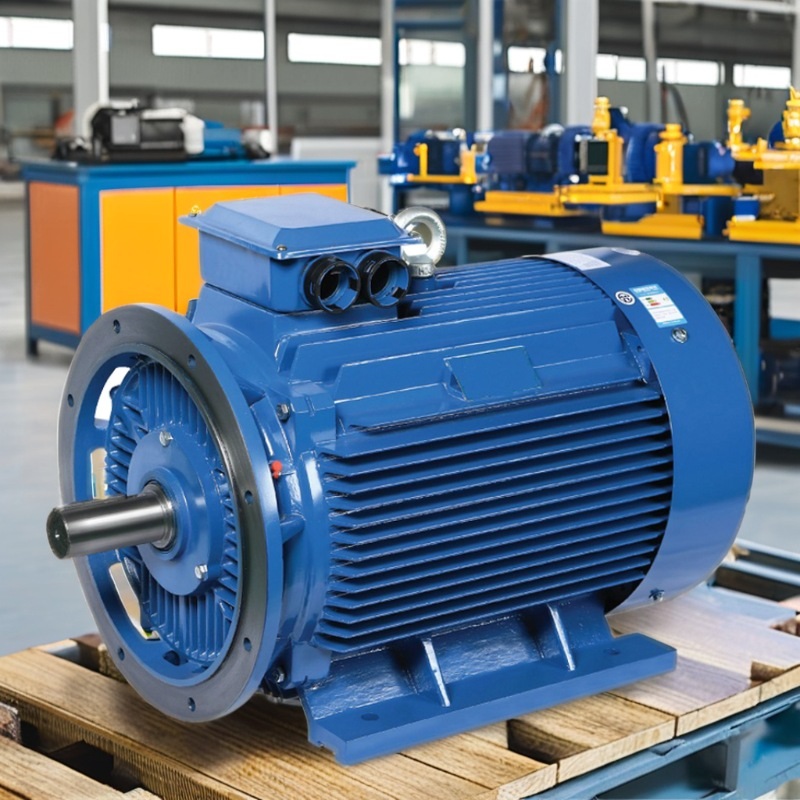
Because there is no induced current in the rotor, rotor copper losses are zero. This allows the permanent magnet synchronous motor to operate at a temperature rise that is 20K lower than standard induction motors . This superior thermal performance enables ENNENG to design motors with higher power density, allowing a permanent magnet motor to be built one or two frame sizes smaller than an asynchronous motor of identical power rating, saving critical installation space .
One of the most valuable aspects of integrating an industrial permanent magnet motor is the capability to implement low-speed, high-torque direct-drive systems .
Traditional motor drive trains rely on a high-speed motor coupled with a mechanical speed reducer (gearbox) to achieve the necessary low operating speeds. However, asynchronous motor + reducer configurations generate significant vibration, suffer from high failure rates, and demand constant manual maintenance.
By increasing the number of permanent magnet poles on the rotor, ENNENG can design a permanent magnet synchronous motor to operate reliably at rated speeds down to single digits. This allows the motor to be coupled directly to the driven load, completely eliminating the gearbox .
By removing the gearbox, the direct-drive permanent magnet motor system delivers a range of benefits :
ENNENG’s technical engineering capabilities are proven through widespread commercial applications across China’s leading industrial groups, such as Sinopec, Shandong Gold Mine, and Linglong Tire .
Traditional rubber tyre processing equipment conventionally utilised DC motors or high-speed asynchronous motors with complex gearboxes. These configurations suffered from high energy consumption and heavy maintenance cycles .
ENNENG introduced low-speed high-torque direct-drive permanent magnet synchronous motor systems to replace these legacy drives . Depending on the specific tyre processing formulas and operational processes, customers achieved a verified electricity saving rate ranging from 7% to 40% . Furthermore, the gearbox elimination provided a maintenance-free operation that minimised unscheduled downtime .
Air compressors represent a massive utility cost in manufacturing plants. ENNENG’s permanent magnet variable frequency motors, when paired with customised VFD models, provide a complete variable speed drive solution.
The low temperature rise design (under 60K) ensures long-term operational stability. By matching the motor speed dynamically to actual compressed air demand, these systems achieve soft starts and electricity savings of up to 50% compared to traditional full-pressure starting induction motors, quickly recovering the initial investment.
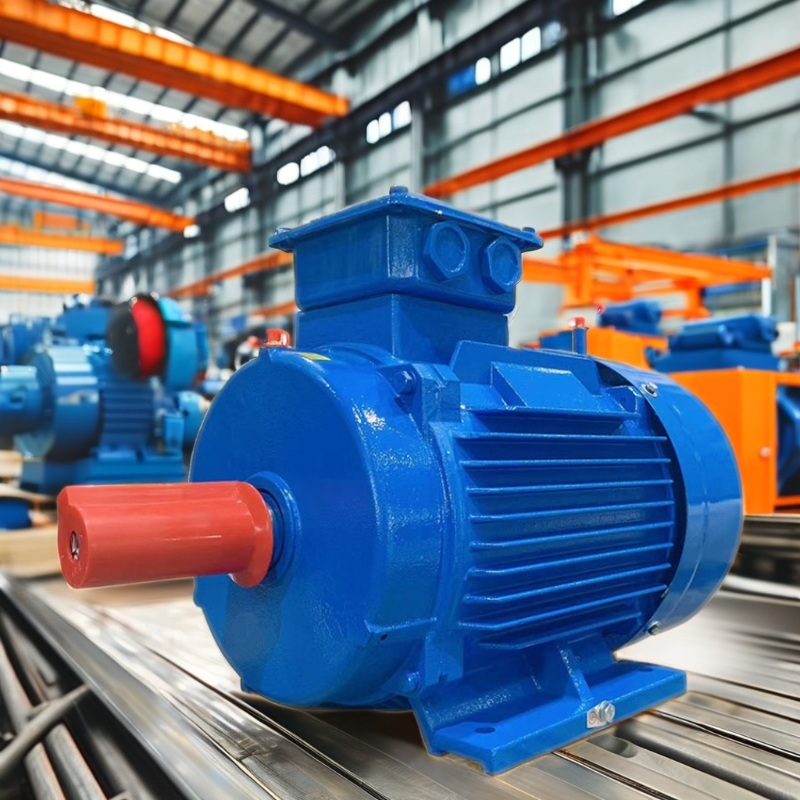
No two industrial facilities share the same spatial or mechanical constraints. ENNENG stands out because we do not just supply off-the-shelf catalogue products; we specialise in delivering a tailor-made permanent magnet motor tailored to your specific application .
Supported by our elite R&D team consisting of engineers from the National Rare Earth Permanent Magnet Engineering Centre, and backed by dozens of patents, we customise high-voltage (6kV/10kV) and low-voltage (380V/660V/1140V) solutions to match your existing footprint. From water treatment facilities and oil wells to explosion-proof mining environments, we deliver optimal performance where general-purpose motors fail .
If you are evaluating commercial permanent magnet motors for sale and need an engineered drive solution that guarantees efficiency and longevity, ENNENG is your trusted partner.Contact ENNENG Today.Speak to our technical engineering team to receive a customised drive proposal.
A: Yes. Our general and standard type motors adopt universal frame sizes that match widely used asynchronous motors, making replacement and design selection exceptionally convenient .
A: Because the rotor contains permanent magnets with fixed poles, the motor must be driven by a dedicated controller or VFD to synchronise the stator’s rotating magnetic field with the rotor’s speed.
A: In general industrial sectors, replacing asynchronous motors saves 5% to 30% of system energy for low-voltage applications, and 2% to 10% for high-voltage applications . Specialised applications like air compressors can achieve savings up to 50%.
A: Eliminating the gearbox reduces rotating parts, making the direct-drive permanent magnet motor a safer option . It removes the risk of gear wear and oil leaks, resulting in a system that is virtually maintenance-free .